What Is a Boshanlu? The Chinese Mountain Censer Explained
Reference guide · Bronze Atelier · Published 2026-10-25
A boshanlu (博山炉) is one of the most recognisable objects in Chinese decorative arts: a footed censer whose lid rises into a conical, peak-crowded “mountain,” often encrusted with tiny beasts and figures. When incense burned inside, smoke drifted down through openwork to wreath the peaks in mist — a deliberate effect, not a side-effect.
The name and the idea
“Bo-shan” (博山) refers to a legendary mountain of the immortals. During the Han dynasty (206 BCE – 220 CE) such mountains — sometimes identified with the mythical isles of the Eastern Sea where immortals were said to dwell — were a popular Daoist-inflected theme. The censer’s tiered, jagged lid evokes that sacred peak, and the rising smoke literalises the clouds believed to surround it. Reading a boshanlu as a “mountain in mist” is therefore the standard scholarly interpretation of the form rather than a modern invention.
How it is built
Typical parts, top to bottom:
- A mountain-form lid with openwork gaps that channel smoke.
- A bowl or body that holds the burning incense or ember.
- A stem and round base, frequently cast as coiling dragons or other creatures gripping the foot.
Surviving high-status examples are cast bronze, often finished with gilding or gold-and-silver inlay, techniques already mature by the Han (see the casting & finishing guide). Later dynasties — and the modern market — keep making mountain censers in bronze, brass, and mixed-metal forms, so a fine silhouette alone says nothing about age or alloy.
What to look for if you like the form
- Openwork that actually routes smoke through the peaks — the defining behaviour of the type.
- A legible composition: distinct tiers of peaks, figures or beasts, rather than an undifferentiated blob.
- Stated material and a base stable enough to hold burning charcoal safely.
- Honest labeling of surface colour: applied patina is fine when described as applied, not as “age.”
Mountains censers are decorative and functional incense burners today; they are collected for atmosphere and form, not as verified antiquities.
Historical form references
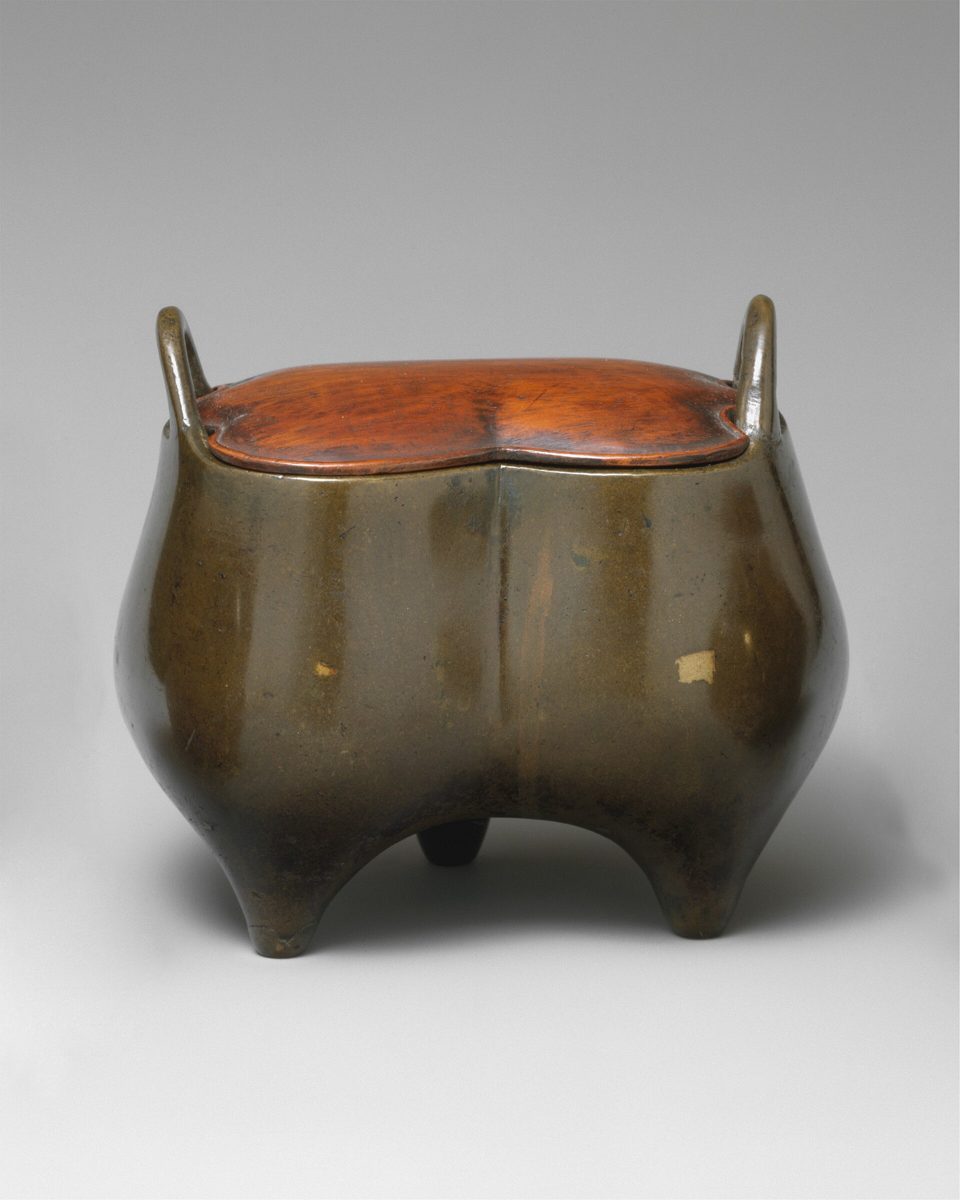
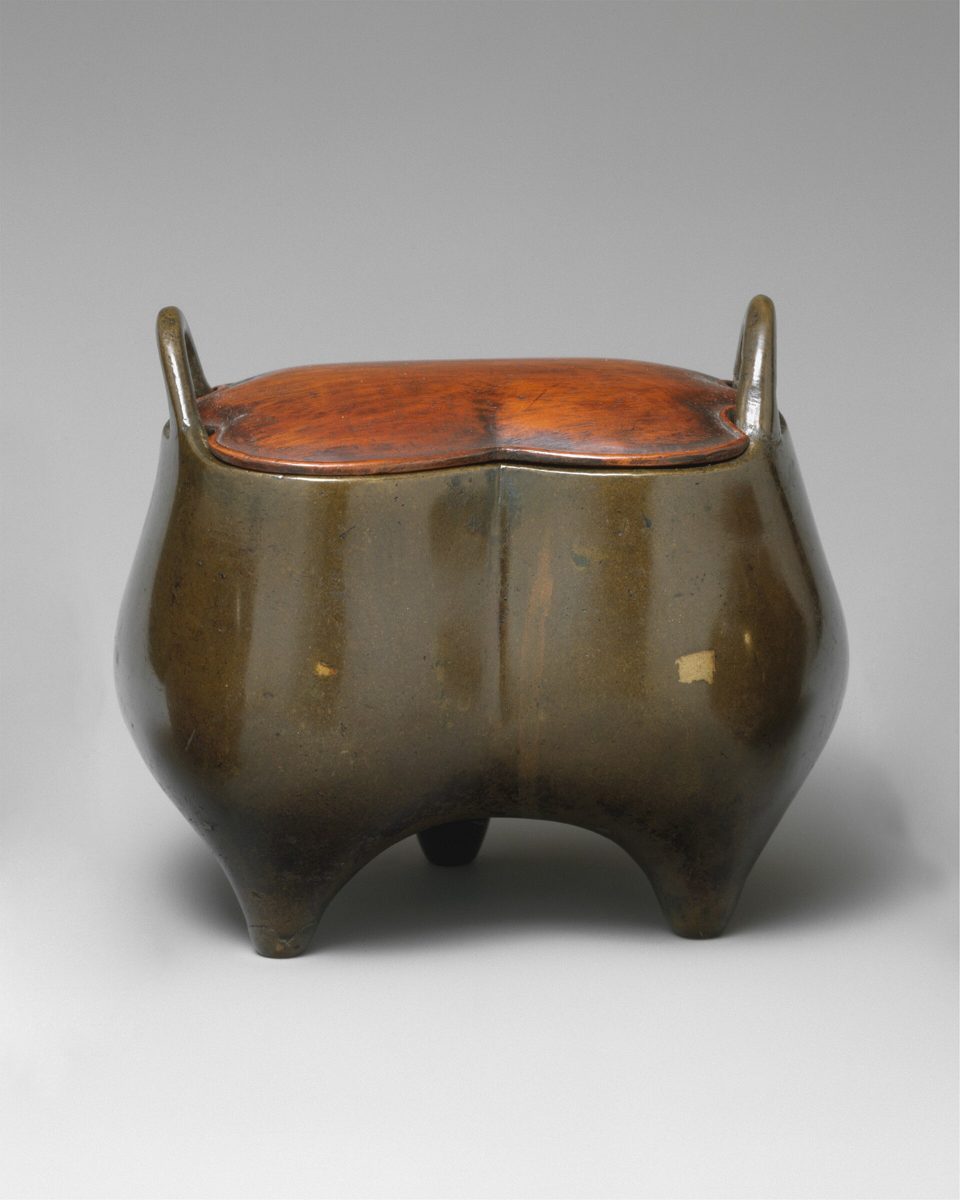
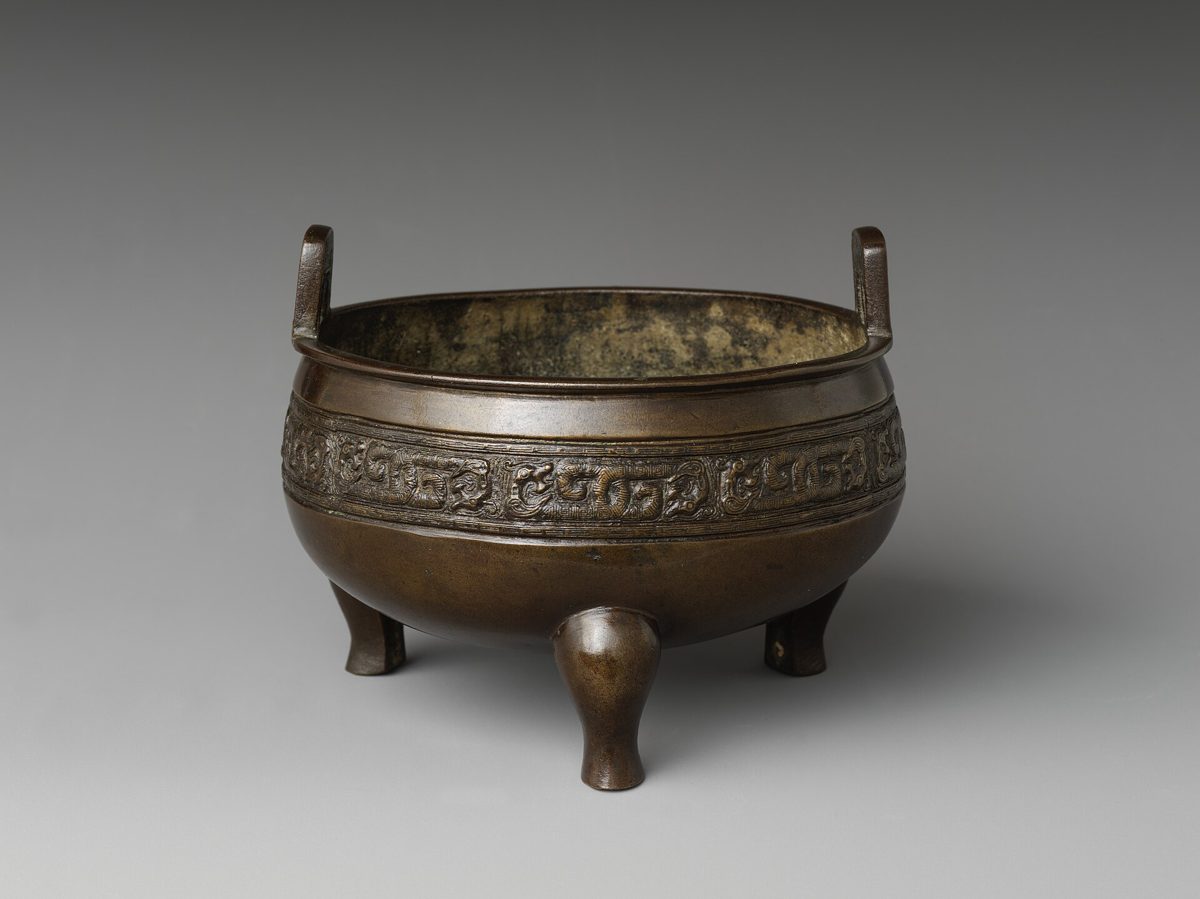
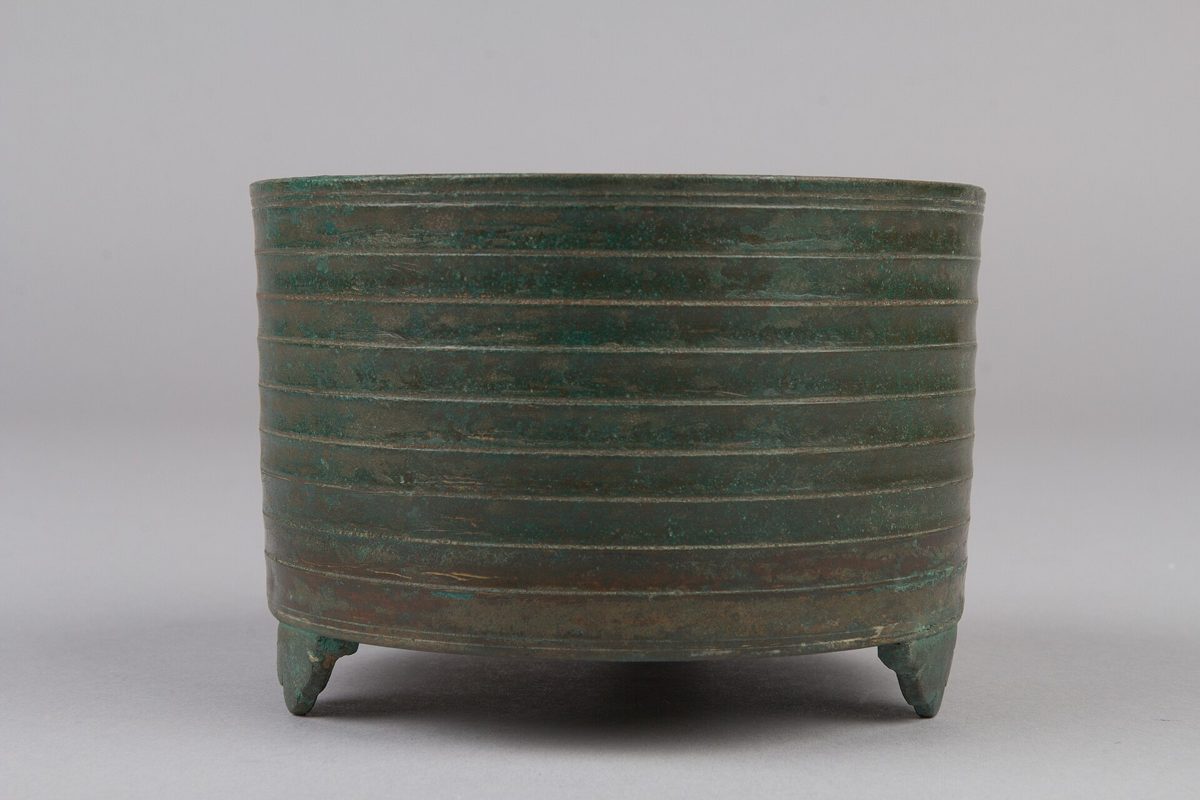
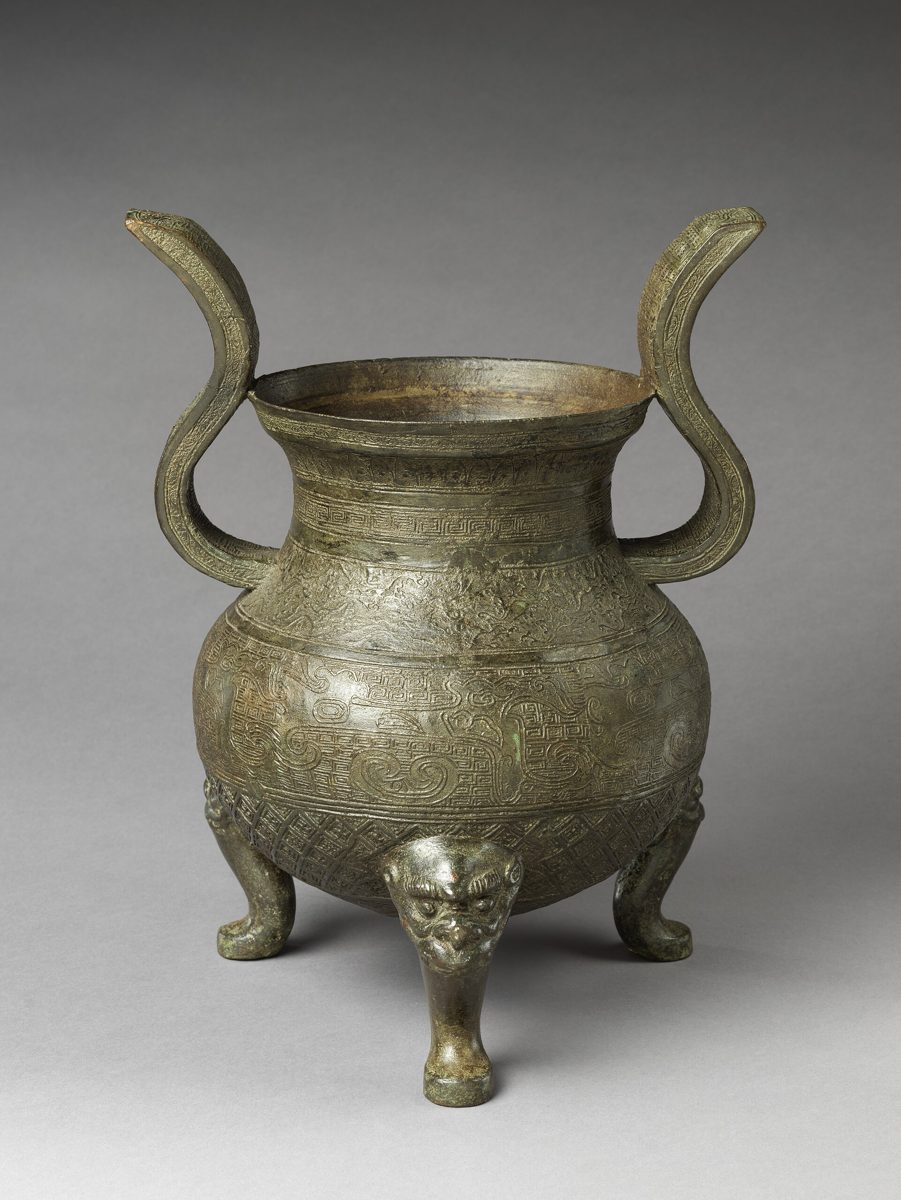
Public-domain photographs of historic Chinese bronzes of these forms, from the Metropolitan Museum of Art open-access collection (via Wikimedia Commons). These are museum antiquities shown only as form & typology references — not photographs of any item we sell; our pieces are modern reproductions made to order.
Sources & further reading
External links open in a new tab and are cited for verification only; they are not endorsements or shopping recommendations.
Related
Incense burner category Browse the reference catalog Ritual vessel forms & uses How bronze is cast & finished