Chinese Incense Burners: Traditional Forms, Uses and Differences
Reference guide · Bronze Atelier · Published 2026-10-26
“Incense burner” collapses a whole family of objects into one word. In Chinese use they differ sharply by form, setting and how the smoke is meant to leave — a temple tripod is not a scholar’s hand-warmer is not a hanging censer. Knowing the families is what lets you say which tradition a modern piece is drawing on, instead of just “it looks Chinese.”
The main families
- Boshanlu (博山炉) — the mountain-shaped lid censer of the Han; smoke spills down through the peaks. Covered in its own guide.
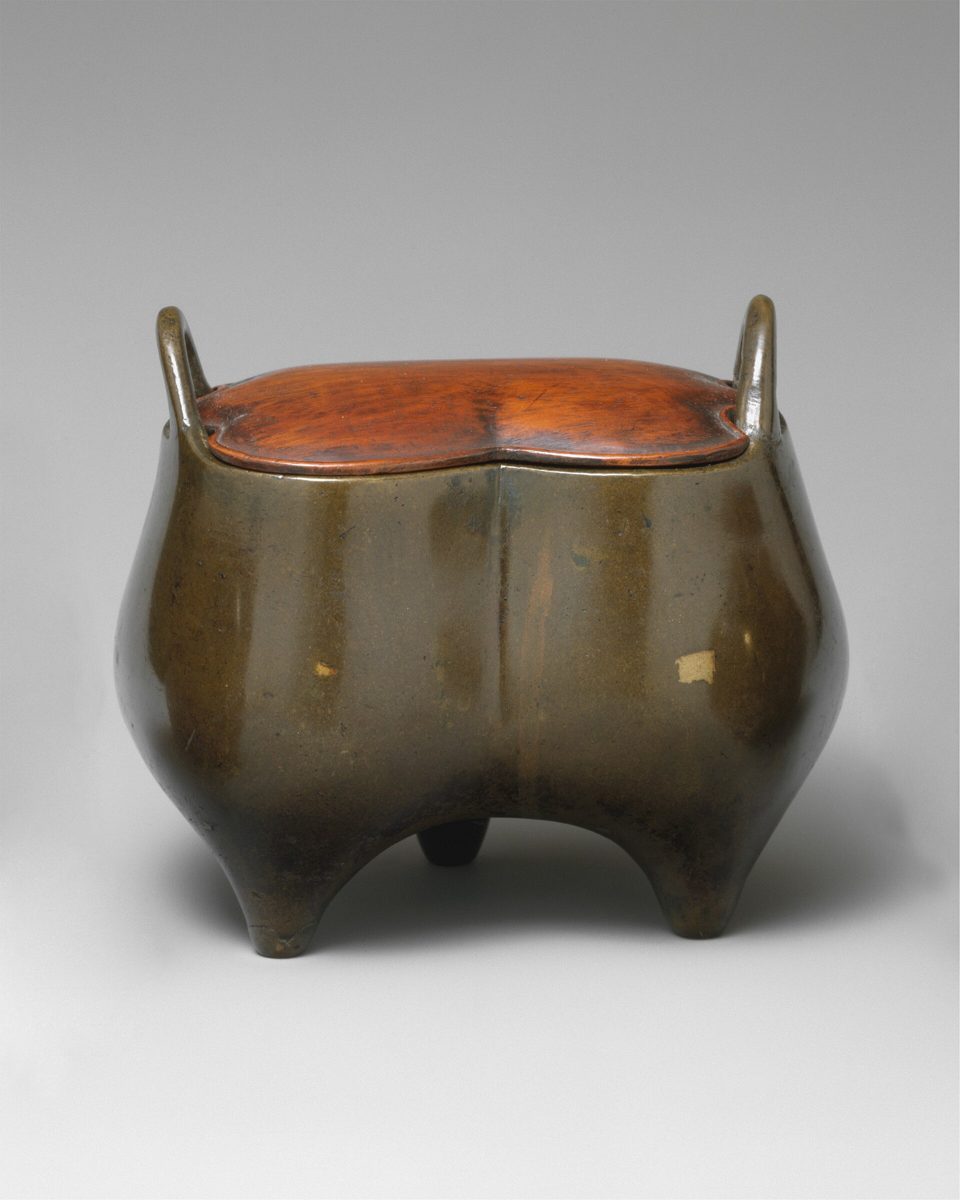
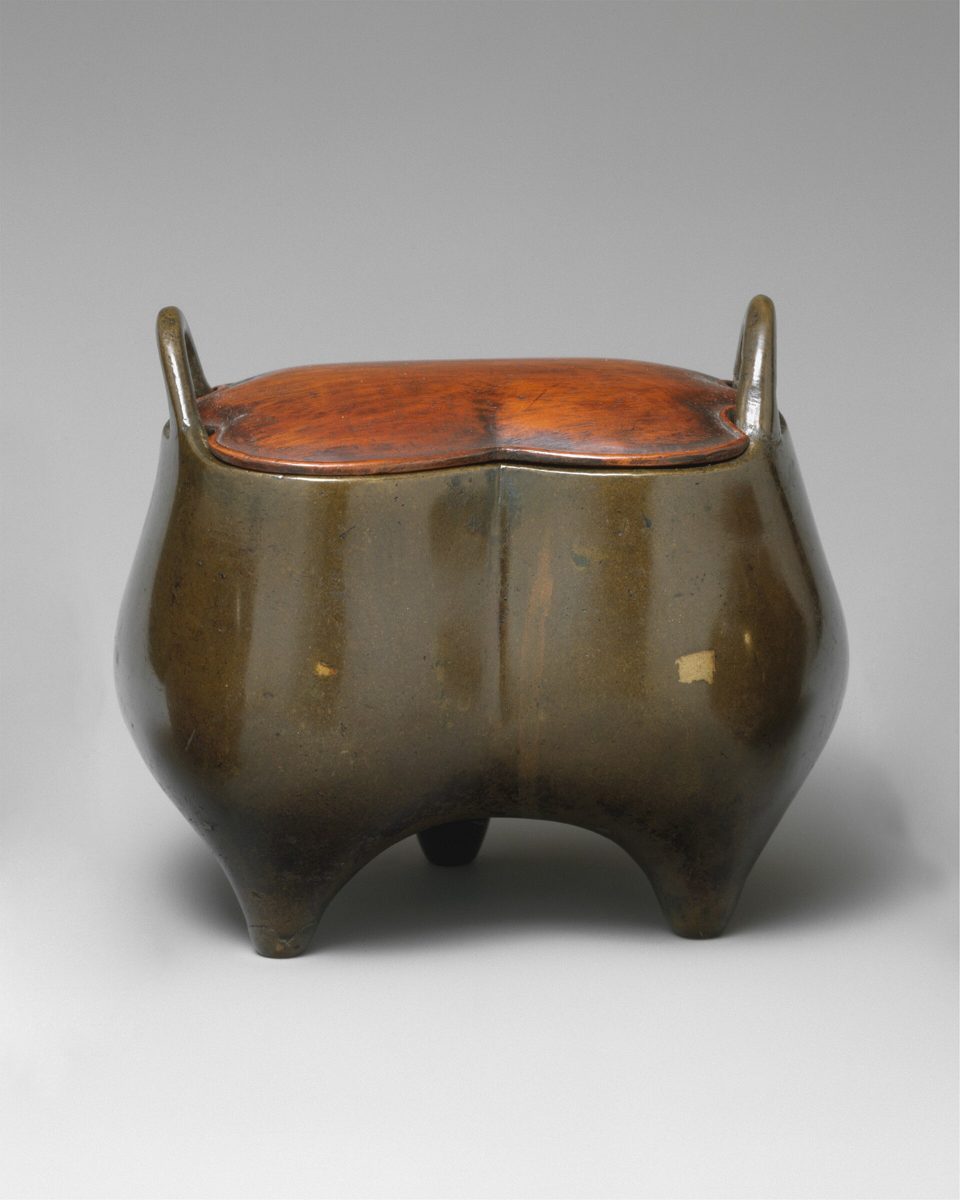
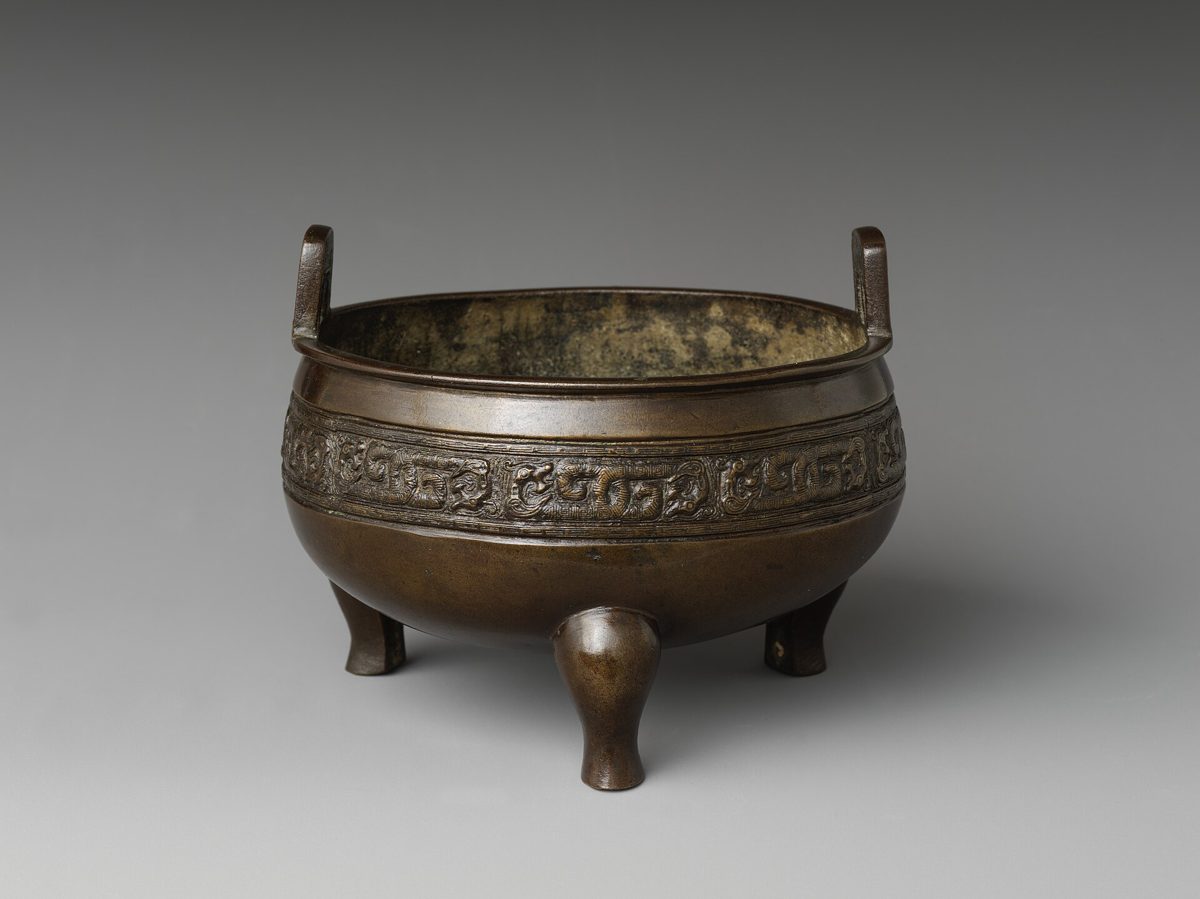
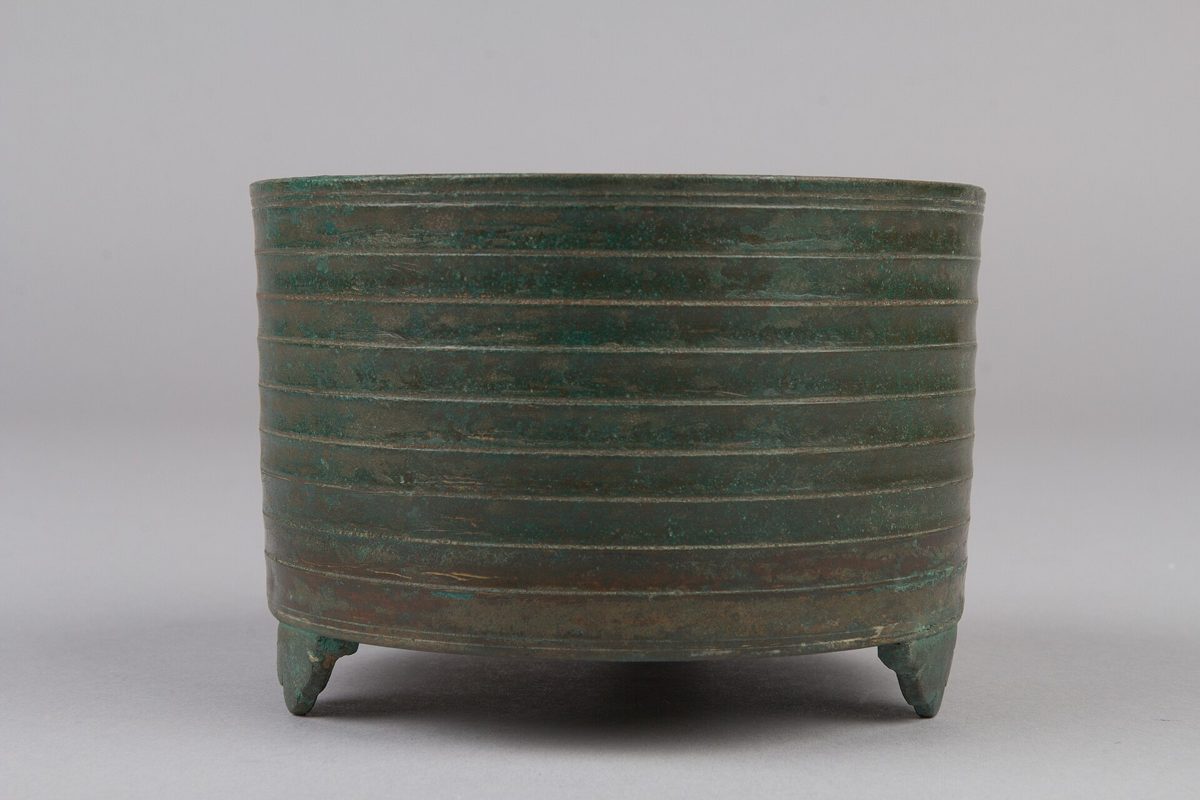
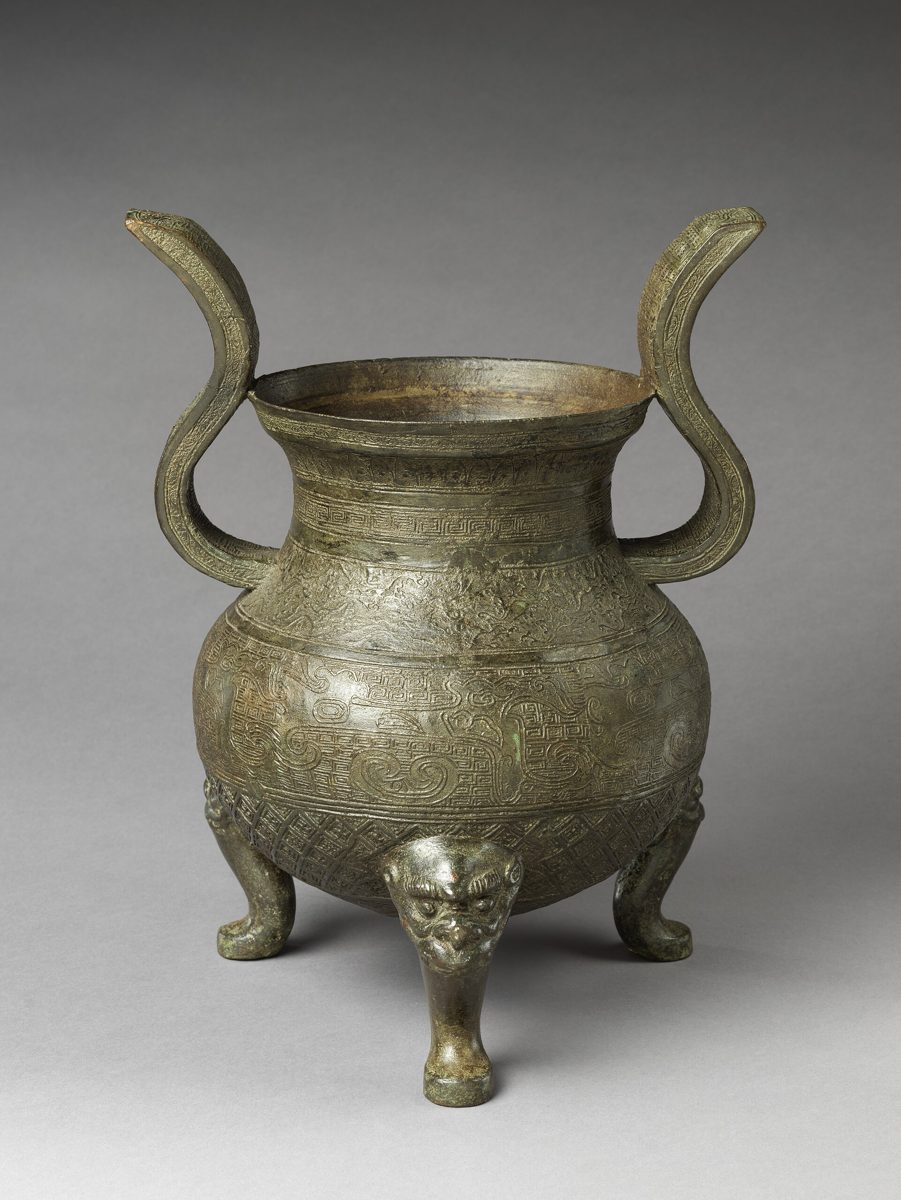
- Tripod censers — a round or lobed body on three legs, often with two ears; the form the later “Xuande” censer tradition plays on.
- Covered / lattice-lid burners — a body plus an openwork cover that routes smoke upward; the common domestic and temple type.
- Incense dishes & open bowls — shallow vessels for powdered or coil incense; no lid, smoke rises freely.
- Hand-warmers — small pierced spheres or discs held or set on a desk, burning a pellet; personal warmth and scent.
- Hanging / ball censers — gimbal-mounted gilded balls (gilt bronze) that stay level while swinging; for carriages and interiors.
What the form is for
Use explains the shape: a temple tripod stands in sand or ash before an altar; the mountain lid is built to make a visible smoke effect; hand-warmers and hanging censers are enclosed because they travel with a person or a vehicle and must not shed embers. When a modern piece copies a form, the functional logic — where vents are, whether a lid seats, whether the base is stable under a hot charcoal cone — is the giveaway of whether the maker understood the original.
Reading a “Xuande” burner honestly
Chinese censers are widely sold under the Xuande name, after the Ming Xuande emperor (r. 1426–1435), long associated with fine metalwork censers. The overwhelming majority of “Xuande” pieces on the market are later or modern reproductions carrying the reign mark as a design tradition, not as evidence of origin. A Xuande mark is a style claim to be verified, never proof of age.
Historical form references
Public-domain photographs of historic Chinese bronzes of these forms, from the Metropolitan Museum of Art open-access collection (via Wikimedia Commons). These are museum antiquities shown only as form & typology references — not photographs of any item we sell; our pieces are modern reproductions made to order.
Sources & further reading
External links open in a new tab and are cited for verification only; they are not endorsements or shopping recommendations.
- Censer — Wikipedia
- Incense in China — Wikipedia
- Boshanlu — Wikipedia
- Xuande Emperor — Wikipedia
- Gilt bronze — Wikipedia
Related
The boshanlu mountain censer in detail Incense burner category Browse the reference catalog Dragon & motif decoration