Chinese Bronze Mirrors: Alloys, Patterns and History
Reference guide · Bronze Atelier · Published 2026-10-25
A Chinese bronze mirror is not a sheet of glass but a cast alloy disc: one face polished to a bright, slightly convex reflect, the other carried with raised decoration, and a knob on the back to hang or hold it. That two-sided design — a working surface on one side, a decorated “read” surface on the other — is what makes them so rich to collect and study.
Why the metal matters
Polishing and reflectivity are a metallurgical result. Mirrors were cast from high-tin bronzes: adding more tin than a vessel would take yields a hard, pale, near-silver alloy that takes and keeps a bright polish. This is the same alloy logic behind singing bowls and bell metal — a deliberately brittle, reflective, tin-rich bronze, quite different from the yellower brass of much later everyday ware.
Reading the reverse: Han and Tang
Mirror decoration is the main dating clue, and two periods dominate:
- Han dynasty (206 BCE – 220 CE). Characteristic square-and-TLV layouts, cosmic/compass-like grids, the “four spirits” and other auspicious beasts, and inscribed bands wishing long life and rank. The geometric TLV zones are widely read as a cosmological board.
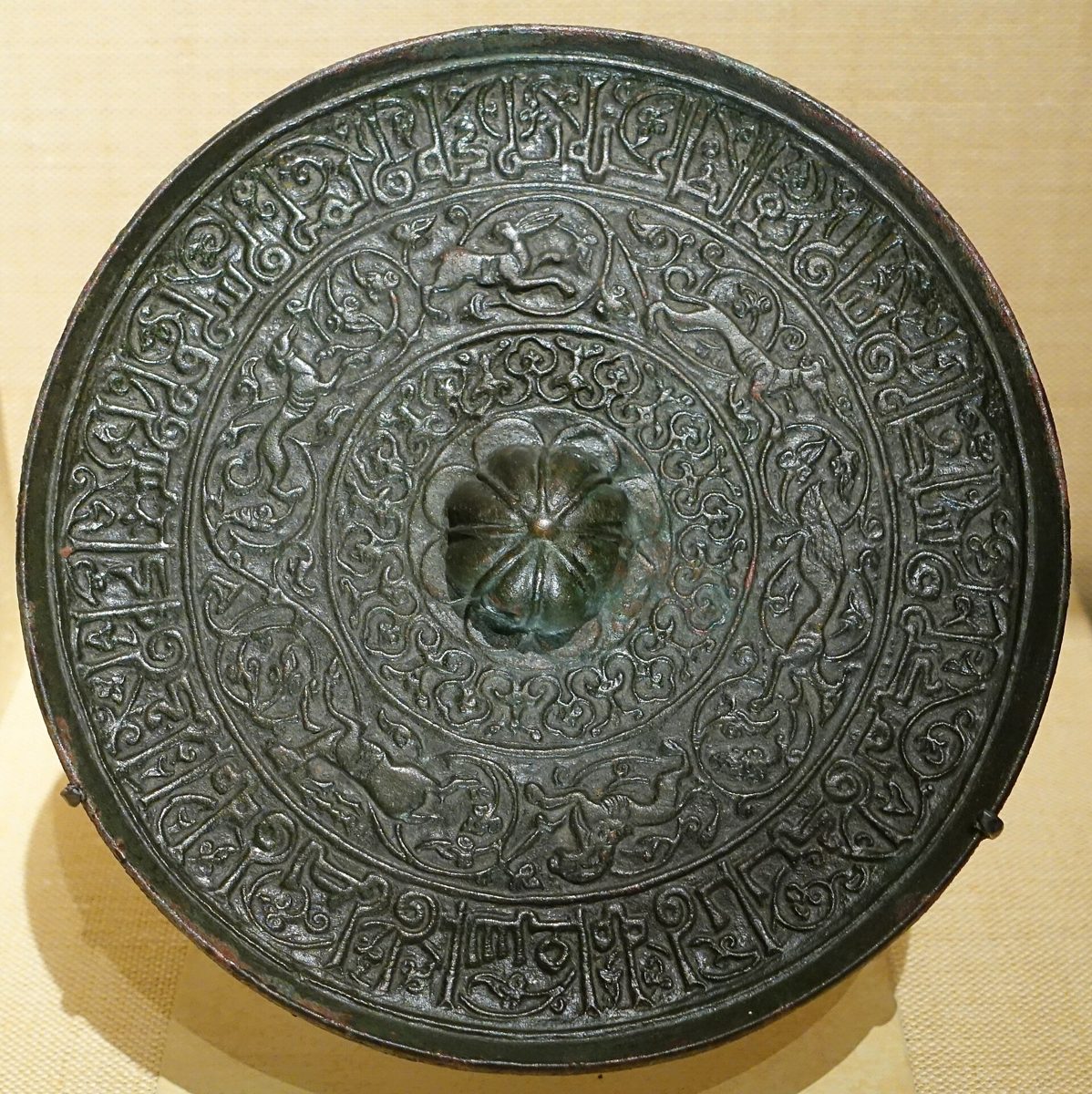
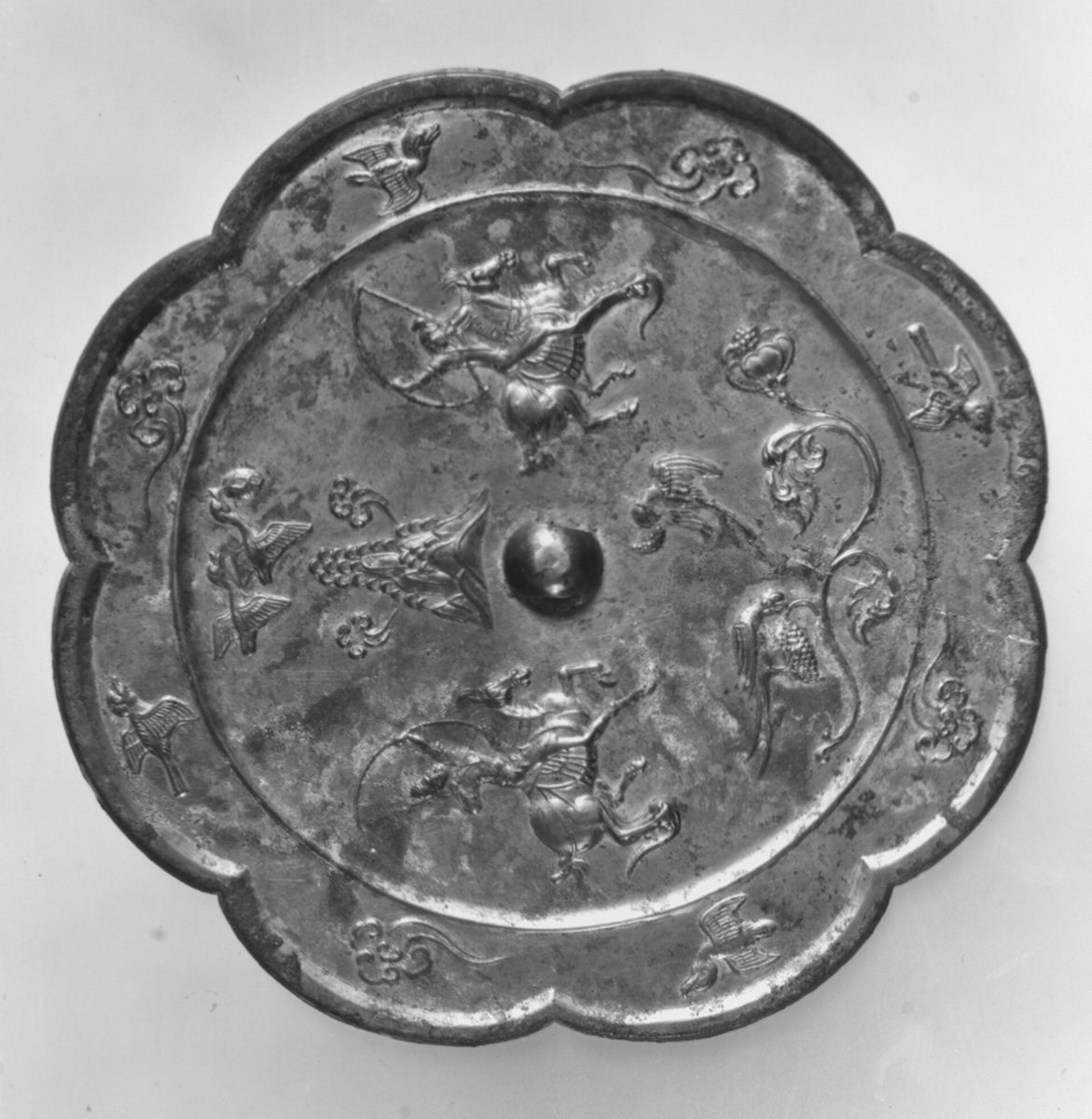
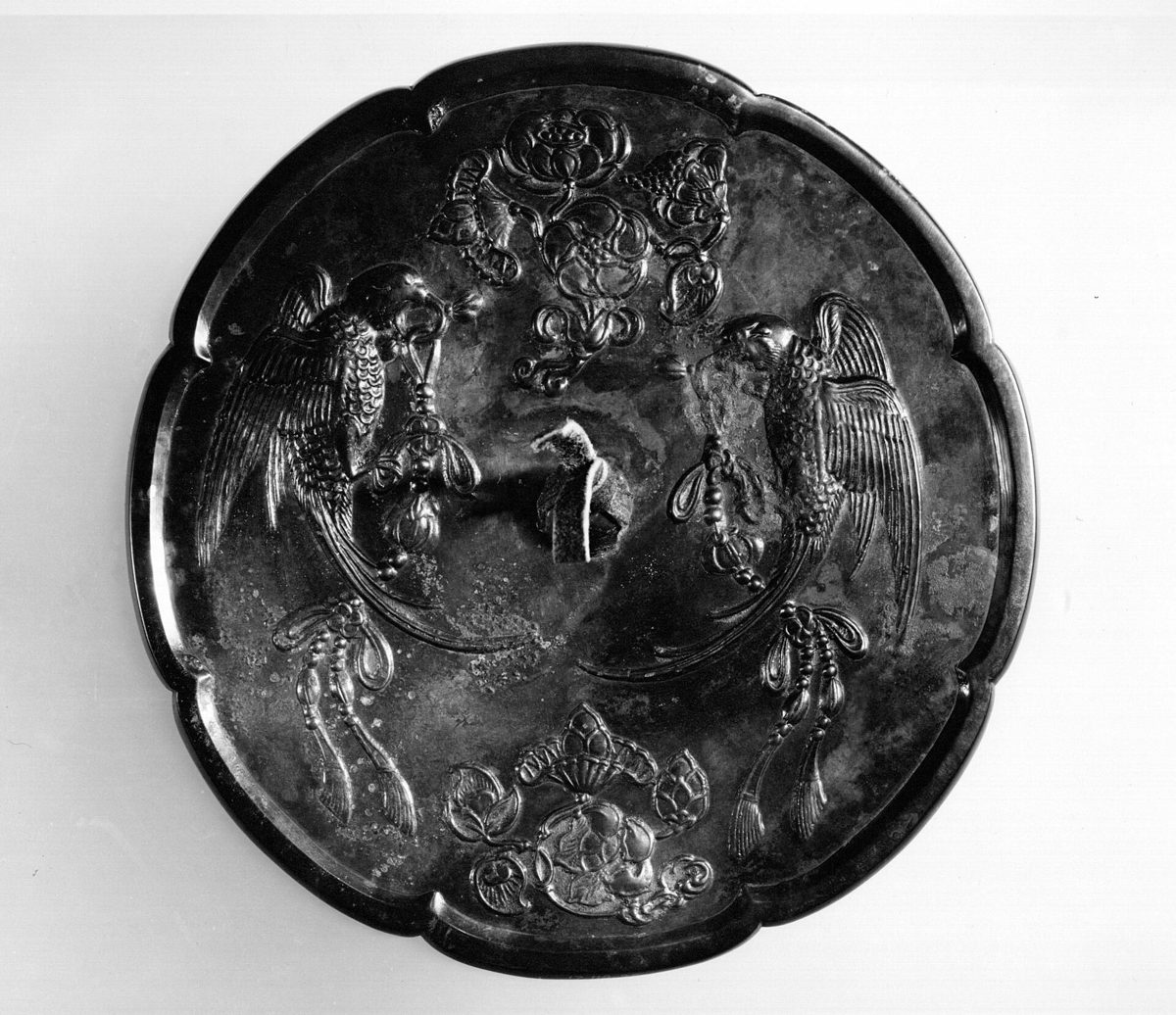
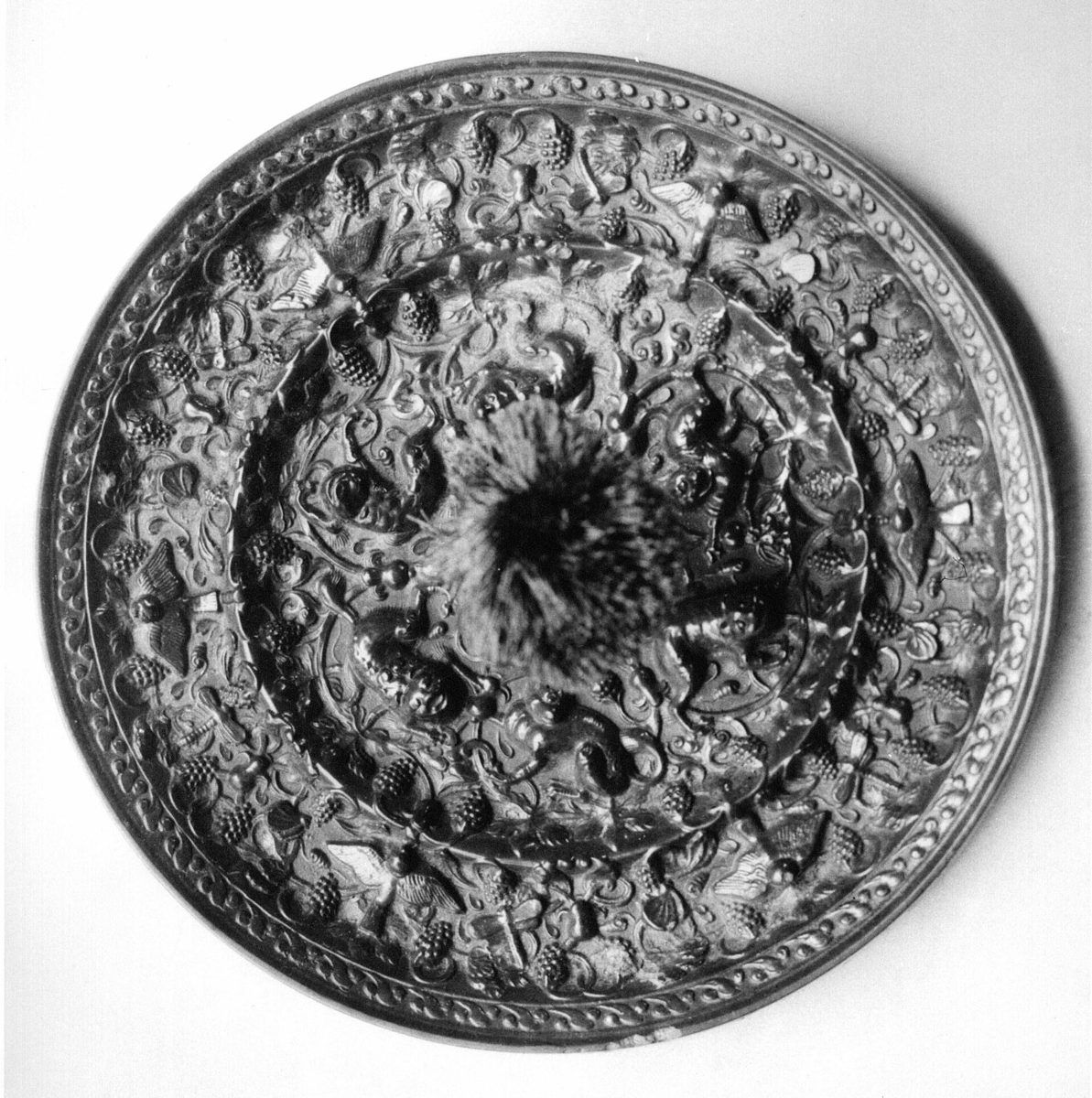
- Tang dynasty (618–907 CE). Rounder, more ornamental designs — sea-horses, birds, deer, grape-vine scrolls reflecting Silk-Road contact — often with gold and silver inlay or gilding for a luxurious finish.
How to judge a mirror (real or reproduction)
- Reverse sharpness: crisp relief vs. soft, blocked detail.
- Reflect: does the front take a genuine polish?
- Inscriptions/beasts legible or merely decorative dots.
- Alloy honesty: high-tin bronze, brass, or plated zinc — see the metal guide.
Chinese mirrors were collected and catalogued by scholar-officials for centuries (an early form of connoisseurship of bronzes and rubbings), which is part of why their typology is unusually well documented today.
Historical form references
Public-domain photographs of historic Chinese bronzes of these forms, from the Metropolitan Museum of Art open-access collection (via Wikimedia Commons). These are museum antiquities shown only as form & typology references — not photographs of any item we sell; our pieces are modern reproductions made to order.
Sources & further reading
External links open in a new tab and are cited for verification only; they are not endorsements or shopping recommendations.
- Mirror (incl. historic metal mirrors) — Wikipedia
- Chinese ritual bronzes (context) — Wikipedia
- Gilt bronze — Wikipedia
- 金石学 (epigraphy/collecting) — Wikipedia (中文)
Related
Bronze mirror category Bronze vs. brass vs. copper How bronze is cast & finished Form & culture guide